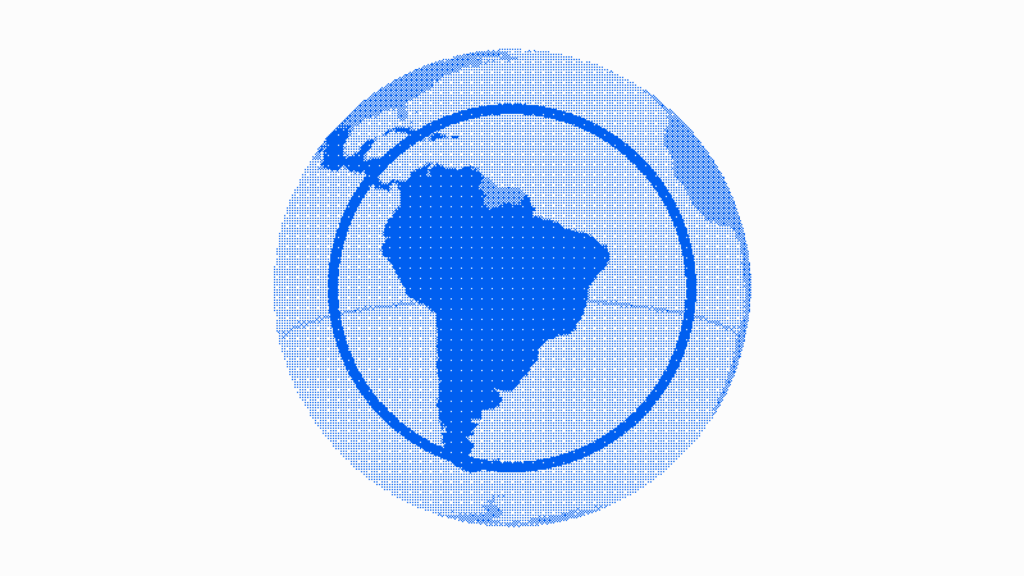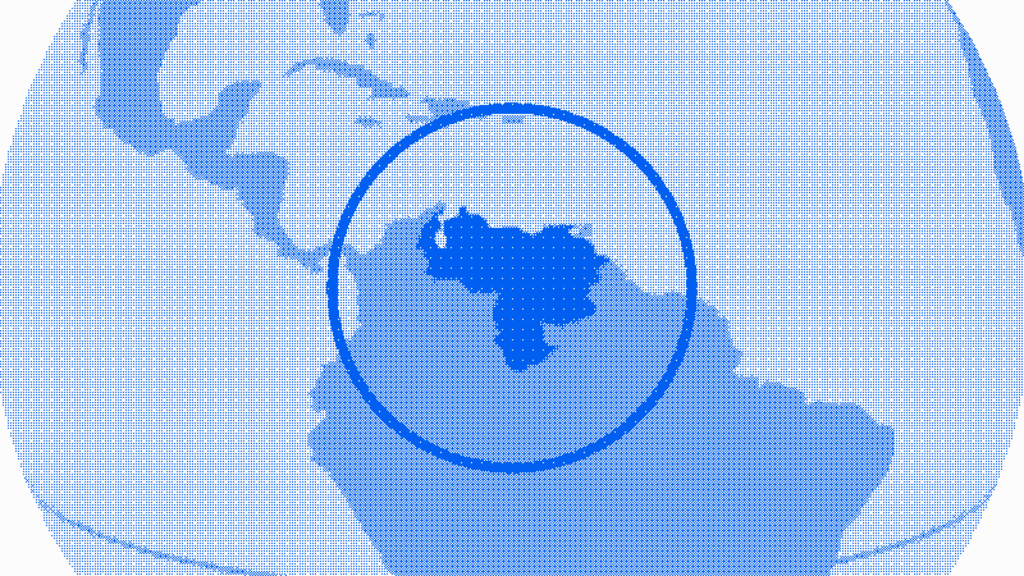
Venezuela does not have a specific rule for tokenizing securities. The securities market is supervised by SUNAVAL under the Ley de Mercado de Valores de 2015, and the crypto regulator, SUNACRIP, has been in restructuring since 2023. To raise capital in Europe, the Spanish route is viable, but it requires enhanced KYC/AML and sanctions compliance. […]
Two regulators and an untraced border
The Superintendencia Nacional de Valores (SUNAVAL) regulates, supervises and sanctions those who participate in the securities market under the Decreto con Rango, Valor y Fuerza de Ley de Mercado de Valores, published in Gaceta Oficial Extraordinaria 6,211 of December 30, 2015. It is the market that operates today: companies that issue commercial paper, bonds or shares with a prospectus approved by SUNAVAL, listed on the Caracas Stock Exchange, the Public Stock Exchange or the Venezuelan Decentralized Stock Exchange. Many recent issuances are denominated in dollars and are traded and settled in bolívars at the exchange rate of the Central Bank of Venezuela, and there is a specific public offering regime for SMEs.
The other regulator is the Superintendencia Nacional de Criptoactivos y Actividades Conexas (SUNACRIP), which operates under the Decreto Constituyente sobre el Sistema Integral de Criptoactivos, published in Gaceta Oficial 41,575 of January 30, 2019. In March 2023 the agency was placed under intervention following a corruption case involving its officials, and a six-month restructuring process was opened that was extended at least three times by decree (September 2023, March 2024 and September 2024). It has continued renewing some exchange licenses, with very limited activity according to specialized press. In parallel, cryptocurrency mining was suspended in May 2024 due to pressure on the power grid, and Petro, the state crypto asset, was withdrawn in January 2024, when Plataforma Patria closed its wallets.
The problem for an issuer lies in the middle. A tokenized security is at once a security, SUNAVAL's territory, and a digital asset, SUNACRIP's territory, and no rule resolves which regime prevails. Specialists consulted by the press in 2026 agree that, beyond conceptual definitions, there is no specific regulation on tokenization.
What an issuer can do without leaving Venezuela
- Traditional issuance before SUNAVAL. Commercial paper, bonds or shares with an approved prospectus. It is the operational route, with moderate amounts and a local investor base.
- Local tokenized security. No specific framework and a risk of overlapping powers between both regulators. Today it requires prior consultation with SUNAVAL and tolerance for uncertainty.
- Private placement. Possible for small rounds with known investors, without liquidity or reach outside the country.
Compliance: what a Venezuelan issuer must prepare to raise capital in the EU
This section does not assess the country's situation: it describes the procedure that European regulations require from any entity working with an issuer linked to Venezuela. It is advisable to know it before starting, because it conditions timelines and documentation.
- Enhanced due diligence. Venezuela has been on the EU list of high-risk third countries for anti-money laundering since August 2025 (Delegated Regulation (EU) 2025/1184), after its inclusion by the FATF among jurisdictions under increased monitoring, where it remained in June 2026. Spanish entities subject to Ley 10/2010 de prevención del blanqueo de capitales, such as the ERIR, intermediaries and banks, must apply enhanced measures: identification of the company and its beneficial owners, source of funds and ongoing monitoring of the relationship.
- EU sanctions screening. The EU Council maintains restrictive measures on specific individuals, with asset freezes and travel bans, in addition to an arms embargo, extended until January 10, 2027. No funds may be made available to a listed person, either directly or indirectly.
- U.S. sanctions screening. The OFAC regime has changed several times: in 2026 general licenses were issued that ease restrictions in specific sectors, such as oil, but designations of individuals and entities remain in force. If banks, dollars or U.S. providers are involved in the transaction, it must be verified on a case-by-case basis.
In practice, the issuer must prove who its shareholders, directors and beneficial owners are, that none of them appears on the EU or OFAC lists, and where the assets come from. Investors undergo the same controls. With that documentation ready, the process is viable.
When the European route makes sense from Venezuela
Spain offers what Venezuela currently lacks: a published framework for the tokenized security. Article 8 of Ley 6/2023 created the ERIR, the entity responsible for the registration and recording of securities on distributed ledger technology, developed by Real Decreto 814/2023. The first authorized ERIR was URSUS-3 Capital, A.V., in November 2024, and the ERIR registry shows which entities are authorized. Since a security token is a financial instrument, it falls outside MiCA (Article 2.4).
- Legal certainty. A single supervisor, the CNMV, and a clear classification of the instrument, compared with the undefined border between SUNAVAL and SUNACRIP.
- Fundraising in euros. As of June 5, 2026, the prospectus exemption reaches 12 million euros per issuer in 12 months. Above that, a prospectus approved by the CNMV is passported to the rest of the EU.
- Diaspora investors. Many Venezuelans residing in Spain and in other EU countries can subscribe to a European issuance with the protections of Union law, something a local issuance does not offer them.
The usual structure is a Spanish special purpose vehicle that issues and channels the funds to the business in Venezuela, with documented and screened flows. The detail is in the guide on how to issue a security token in Spain.
Venezuela versus the European route
| Criterion | Venezuela | European route (Spain) |
|---|---|---|
| Regulation on tokenized security | Not specific | Art. 8 Ley 6/2023 and RD 814/2023 |
| Supervisor | SUNAVAL (securities) and SUNACRIP (crypto-assets), with no defined border | CNMV, with registration in an ERIR |
| Operational status | Traditional market active; tokenization without a dedicated window | Operational since 2024 |
| Compliance | Local prevention regulations | Enhanced due diligence and EU sanctions screening |
| No prospectus | Private placement | Up to 12 M€ per issuer in 12 months |
| Usual currency | Dollars settled in bolivars | Euros |
The process in brief for a Venezuelan company
- Compliance pre-check. Corporate structure, beneficial owners and documented source of funds, and screening against EU and OFAC lists before investing in anything else.
- Define the instrument. Debt, equity or economic rights over an asset, with its classification as a security.
- Set up the structure. Spanish special purpose vehicle and channel of funds to Venezuela reviewed by the banks involved.
- Designate the ERIR and prepare the documentation. Information document under the exemption or passported prospectus.
- Issue and administer. Placement with verification of each investor and management of the security throughout its life.
How to decide
For short-term local financing, the SUNAVAL market is the natural option. For a tokenized security or raising funds abroad, the Spanish route offers published rules in exchange for more compliance. Unlike Colombia or Panama, that compliance is the first step here. The hub for Latin American issuers compares the routes across the region.
Frequently asked questions
Is there regulation for tokenization of securities in Venezuela?
No specific regulation. SUNAVAL supervises the securities market under the Ley de Mercado de Valores de 2015, and SUNACRIP regulates cryptoassets under a 2019 constituent decree, but no rule clarifies which regime applies to a tokenized security. In practice, any local project requires prior consultation with the regulator and accepting uncertainty over regulatory jurisdiction.
What happened to SUNACRIP and the Petro?
SUNACRIP was placed under intervention in March 2023 and entered a restructuring that was extended at least three times by decree, with very limited activity since then. The Petro, the state cryptoasset, was withdrawn in January 2024 when the Plataforma Patria wallets were closed. Cryptocurrency mining was suspended in May 2024.
Can a Venezuelan company issue a security token in Spain?
Yes, normally through a Spanish special purpose vehicle, but with enhanced due diligence: Venezuela is on the EU list of high-risk third countries for money laundering. The ERIR and intermediaries will verify beneficial owners and source of funds, and screen the issuer and investors against EU and U.S. sanctions.
Does your Venezuelan company want to raise euros with a clear regulatory framework? Take the issuance diagnosis (2 min) or request a proposal.
This content is informative and educational. It does not constitute legal, tax, or investment advice. Check the current version of each regulation in the BOE and on EUR-Lex.
HokenFi is a software and infrastructure provider; it does not provide regulated services (CASP, ESI, EAF, or ERIR). This article is informative and does not constitute financial or legal advice.