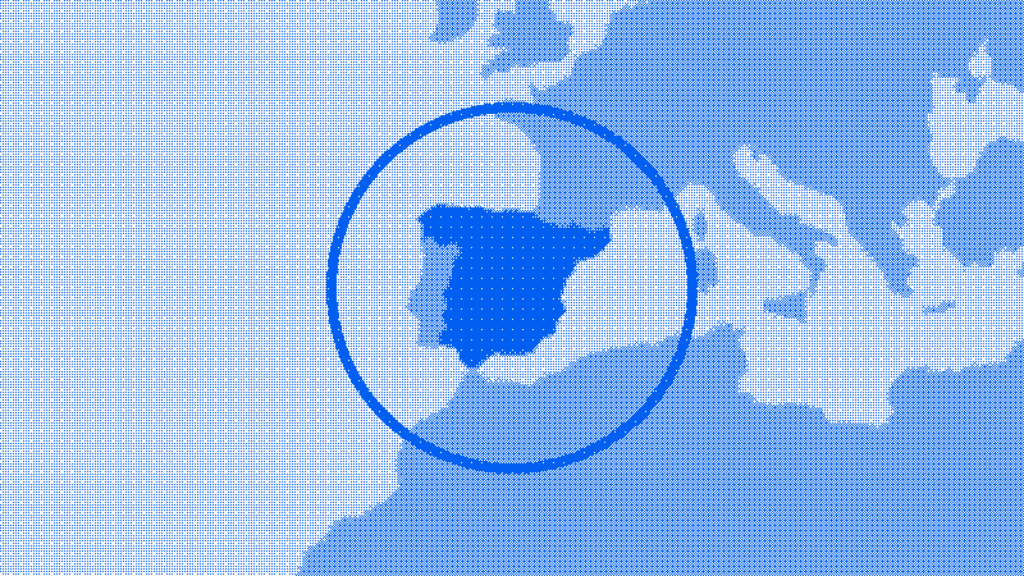
Choosing where to issue security tokens in Europe is not a comparison of statutes. Almost every member state now has a tokenization regime on paper. The question that matters to an issuer is operational: in which country can you contract a supervised register today, get an offer document that travels across the EU, and find providers who have already done this. Spain currently answers all three, which is why it works as an entry point for Spanish and foreign issuers alike.
What a European security token issuance actually needs
Strip the project to its supports and five questions remain. Each one must have a working answer before the first investor signs.
| Support | Question it answers | Status in Spain |
|---|---|---|
| Instrument classification | Does the token incorporate a share, a bond or a fund unit? | MiFID II and Law 6/2023; supervised by the CNMV |
| Registration figure | Who keeps the register of the tokenized security? | ERIR operational; first authorisation November 2024 |
| Offer and distribution | Prospectus or exemption? Does it travel across the EU? | CNMV-approved prospectus passportable to the whole EU |
| Secondary market | Where can the token trade afterwards? | First DLT-TSS authorised 26 November 2025 |
| Service providers | Are there firms you can contract now? | Identifiable ecosystem built around the ERIR figure |
The classification criterion comes from MiFID II, and MiCA expressly excludes financial instruments from its scope, so a security token never falls under the crypto-asset regulation (Annex I, Directive 2014/65/EU; art. 2.4, Regulation (EU) 2023/1114). How the frameworks fit together across the EU is mapped in asset tokenization in Europe.
What already works in Spain
The register: an authorised ERIR
Spanish law admits the representation of shares, bonds and fund units on distributed ledgers, and assigns the register to a qualified entity, the ERIR, the digital notary of the tokenized record (art. 8, Law 6/2023). Its requirements and obligations are set out in Royal Decree 814/2023 (RD 814/2023).
The first ERIR authorised by the CNMV, URSUS-3 Capital, A.V., has operated since November 2024. The regime is general, not a closed licence: new entities can seek authorisation, so issuers are not tied to a single provider by design. What the figure does, and how an issuer contracts it, is explained in what is an ERIR.
The market: a first DLT-TSS authorised
The CNMV authorised the first Spanish DLT-TSS, Securitize Europe Brokerage and Markets, S.V., on 26 November 2025 under the European Pilot Regime. A DLT-TSS combines trading and settlement of tokenized securities inside one supervised infrastructure (Regulation (EU) 2022/858). For an issuer, this answers the question investors always ask first: where can the token trade later.
The test bench: the financial sandbox
Spain runs a controlled testing space for innovative financial projects, with periodic application windows (Law 7/2020, of 13 November). For issuance structures that do not fit the standard mould, a sandbox cohort reduces regulatory uncertainty before committing capital at scale.
The distribution: a prospectus that travels
A prospectus approved by the CNMV is valid across the EU through a notification between supervisors, with no second approval at destination. And below the thresholds no prospectus is needed at all: since 5 June 2026 the general exemption covers 12 million euros raised over 12 months, with a member-state option to lower it to 5 million (arts. 24-25, Regulation (EU) 2017/1129; Regulation (EU) 2024/2809). Thresholds, investor-based exemptions and the notification mechanics are detailed in the EU prospectus passport guide.
The ecosystem: providers you can name
Around the ERIR figure an identifiable professional ecosystem has formed: URSUS-3 Capital, A.V. as the first authorised registry entity; law firms with tokenization practice such as ATH21, Asensi Abogados and Ramón y Cajal Abogados; and registered advisers such as Gabriel Carrillo Capel EAF, S.L. HokenFi coordinates the issuance as the technology platform; it is not a CNMV-authorised entity, and the regulated steps run through these partners. Decision for this section: before comparing countries, list the providers you would actually contract in each one. If the list is empty, the regime is theoretical for you.
Issuing from outside Spain or outside the EU
A foreign issuer does not need to be Spanish to use this circuit. The usual structure is a Spanish vehicle that issues the tokenized securities, with the register kept by an ERIR and the CNMV as supervisor. Incorporation, tax registration, banking, issuance documentation, the ERIR contract and the prospectus can be coordinated end to end; the practical steps are described in setting up a Spanish SPV for tokenization.
Documentation is where the calendar is won or lost. Corporate documents, identification of beneficial owners for AML checks, powers of the signatories and the vehicle’s bank account take more time than any regulatory step. Arriving with an organised file shortens every later phase. If the prospectus is drafted with the passport in mind from the first version, no rewriting is needed when investors from other EU countries appear.
With the prospectus approved, the passport lets a non-EU issuer raise in its target European markets from a single Spanish approval. The Spanish leg of the process, step by step, is in how to issue a security token in Spain; an overview of the full English-language resource set is at hokenfi.com/en.
Spain against the other entry routes
Germany, France and Luxembourg all offer regimes for tokenized securities, each with its own registration figure and supervisor. The useful comparison is not which statute reads better. It is which country lets you contract every support of the table above today, and at what setup and maintenance cost. Spain’s combination of an operational ERIR, a first authorised DLT-TSS, a sandbox and the prospectus passport resolves the complete transaction for many mid-sized issuers without building anything bespoke.
The criterion to take away: qualify your instrument, then choose the member state where every support of your issuance already has a working answer. Where a support only exists on paper, price the delay of being the test case.
Check whether your issuance fits the Spanish circuit before choosing a jurisdiction. Run the 2-minute issuance assessment or request a proposal.
This content is educational. It is not legal, tax or investment advice. Always check the current version of each rule on BOE and EUR-Lex.
HokenFi is a software and infrastructure provider; it does not provide regulated services (CASP, investment firm, financial advisor or ERIR). This article is for information only and is not financial or legal advice.
Frequently asked questions
Can a non-EU company issue security tokens in Europe through Spain?
Yes. The usual structure is a Spanish vehicle that issues the tokenized securities, with the register kept by an authorised ERIR and the CNMV as supervisor. Once the CNMV approves the prospectus, the EU passport allows distribution in other member states without further approvals. Incorporation, banking, AML documentation and the ERIR contract can be coordinated end to end.
Why is Spain an operational entry point to issue security tokens in Europe?
Because every support of an issuance has a working answer with granted authorisations. The first ERIR, URSUS-3 Capital, A.V., has been authorised since November 2024; the first Spanish DLT-TSS, Securitize Europe Brokerage and Markets, S.V., since 26 November 2025; the sandbox under Law 7/2020 accepts innovative structures; and a CNMV prospectus passports across the EU.
Is HokenFi a CNMV-authorised entity?
No. HokenFi is the technology platform that coordinates the issuance process. The regulated steps run through authorised partners: the ERIR keeps the register of the tokenized securities, law firms and registered advisers handle legal and advisory work, and the CNMV supervises the securities framework under Law 6/2023 and RD 814/2023.