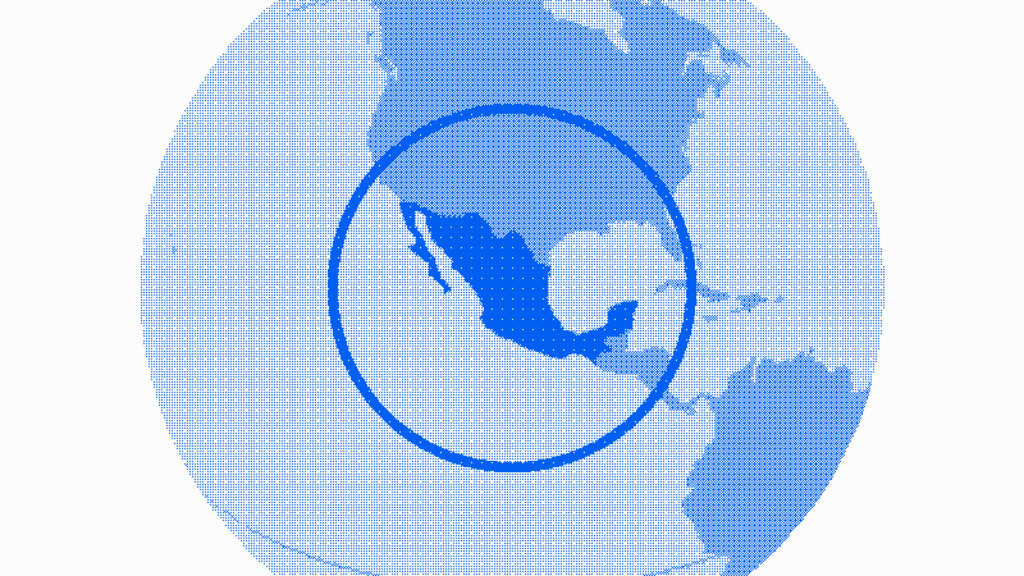
Mexico does not yet have a legal figure for issuing tokenized securities: the Ley Fintech regulates financial technology institutions and the Ley del Mercado de Valores does not provide for registering securities on blockchain. A Mexican company that wants to attract European investors can issue from a Spanish vehicle, with an ERIR under Ley 6/2023.
If you are going to issue from Mexico, in issuing tokenized securities from Mexico you have the three routes, who maintains the registry, and how the issuance with HokenFi is prepared.
The typical profile is a developer with a tourism development, an exporter that gets paid in euros or a family office that wants to open a project to European capital. This guide explains what the Mexican framework allows, how its instruments (CEBURES, CKD, CERPI, FIBRA and trust) translate to the Spanish route and when it is advisable to issue from Spain.
What the Mexican framework allows today (and what it does not)
Mexico was a regional pioneer with the Ley para Regular las Instituciones de Tecnología Financiera (LRITF, DOF 9 Mar 2018), the Ley Fintech. It created two figures subject to CNBV authorization: collective financing institutions and electronic payment fund institutions. Its latest reform, published in the DOF on November 14, 2025, is procedural (alignment with the Código Nacional de Procedimientos Civiles y Familiares) and does not touch tokenization.
Neither of the two figures serves to issue tokenized securities. Collective financing raises funds with per-project caps set in CNBV provisions, and electronic payment funds move money, they do not represent shares or debt. The law also provides for innovative models, a temporary authorization regime that so far has not opened a security token market.
Banco de México also closed the crypto door for regulated entities. Circular 4/2019 (DOF 8 Mar 2019), amended by Circular 37/2020, limits banks' and ITF's virtual assets to internal operations with prior authorization: they cannot offer clients exchange, transmission or custody services for virtual assets.
Securities remain under the Ley del Mercado de Valores, supervised by the CNBV. The reform published in the DOF on December 28, 2023 created simplified registration for simplified issuers (arts. 70 Bis and 90 Bis): offerings directed only to institutional or qualified investors, with the maximum amounts set by the CNBV and supported by the favorable opinion of the exchange. It is a real advance for mid-sized companies, but it is the same old stock exchange circuit, with BMV and BIVA: the law does not contemplate registering securities on blockchain.
The rest are proposals, not rules. IMEF published in December 2025 a technical bulletin proposing a framework for tokenized negotiable securities, and in 2026 an initiative on peso-referenced stable virtual assets was presented in the Senate, focused on payments and with no effect on securities. The regulation-by-regulation analysis is in our reference on Mexico's Ley Fintech and tokenization. To decide, this is enough: if the goal is to issue tokenized securities and attract European investors, the answer is not in the LRITF or the LMV, but in the European framework.
Equivalences: Mexican instruments and their version on the Spanish route
A Mexican issuer thinks of CEBURES, FIBRA or trusts. The table translates each figure to its functional equivalent when the issuance is made from Spain. They are equivalences of function, not of regime: each instrument keeps its legal and tax treatment, and the Spanish route does not replicate, for example, the taxation of a FIBRA.
| Instrument in Mexico | What it is | Equivalent on the Spanish route | Further reading |
|---|---|---|---|
| CEBURES (securities certificates) | Credit instruments that represent participation in a collective credit owed by a legal entity, or rights over a trust estate (LMV, arts. 61 to 64) | Tokenized bond or obligation: debt represented on DLT and registered by an ERIR | Tokenized debt and bonds; for short terms, the promissory note |
| CKD and CERPI | Trust securities certificates issued by a trust to finance projects and invest in companies; CERPI are placed in a public offering restricted to institutional and qualified investors | Interests in an investment vehicle, such as a fund or a venture capital entity, represented on DLT | Tokenization for funds and asset managers |
| FIBRA | Mexican trust dedicated to acquiring or building properties for lease, with at least 70 % of its assets in those assets, which issues participation certificates (LISR, arts. 187 and 188) | SOCIMI tokenized (Ley 11/2009) | SOCIMI tokenized |
| Issuing trust | Irrevocable trust whose trustee acts as issuer with respect to the trust estate (LMV, arts. 2 and 63) | SPV: Spanish special purpose vehicle that issues the securities and channels the funds to the asset | What is an SPV and what is a trust |
| Financial factoring | Assignment of accounts receivable to a factor that advances a large part of their amount | Payment rights or promissory notes represented on DLT | What is factoring |
A useful fact for FIBRA: since 2025, the BME Growth segment of the Spanish stock exchange accepts foreign real estate vehicles similar to SOCIMIs, and BME cited FIBRA as an example. It is a listing route in Spain, different from tokenized issuance, which we explain in the guide to BME Growth. If you need to review how a stock market works, it is in what is the stock exchange.
The European route: issuing from Spain
Spain has recognized since 2023 transferable securities represented in systems based on distributed ledger technology. Ley 6/2023 requires the issuer to appoint an ERIR, the entity responsible for administering the registration and record, something like the digital notary of the issuance (art. 8).
The legal figure is developed in Real Decreto 814/2023 and is already operational: the CNMV authorized URSUS-3 Capital, A.V. as the first ERIR in November 2024. The details are in our guide on what is an ERIR.
The decisive advantage for a Mexican issuer is access to the European investor. As of June 5, 2026, an offer of up to 12 million euros over 12 months, about 13.5 million dollars at the ECB reference rate of October 2, 2026 (1.1225 dollars per euro), may be exempt from a prospectus; each Member State may lower that threshold to 5 million, and the CNMV indicates that the Spanish implementation is pending. Above that, a prospectus approved by the CNMV is passported to the rest of the European Union without new approvals, under Regulation (EU) 2017/1129 as amended by the Listing Act. The full mechanism is in the guide to the European prospectus passport.
A nuance avoids frequent confusion: MiCA does not apply to security tokens. A token that incorporates equity or bond rights is a financial instrument and is governed by MiFID II and securities regulations (art. 2.4 of Regulation (EU) 2023/1114).
Three Mexican profiles where it fits
- Real estate developer. A tourism or residential development attracts European investors through a Spanish vehicle that channels the funds to the project, with tokenized interests or bonds. More details in tokenization for real estate developers.
- Export company. A company that receives payments in euros can issue tokenized debt in that same currency and thus reduce the currency mismatch between its European income and debt service.
- Family office. A Mexican family office uses the Spanish vehicle as a gateway to regulated European issuances, to structure its own issuance or to organize the entry of co-investors.
The common criterion: the asset and the operation remain in Mexico. What moves to Spain is the issuance, its registration and its fundraising framework.
Mexican framework vs. European route
| Criterion | Mexican framework | European route from Spain |
|---|---|---|
| Legal figure for tokenized securities | Does not exist: the LRITF regulates ITFs and the LMV does not provide for registration on blockchain | Recognized: Ley 6/2023 (art. 8) with ERIR and RD 814/2023 |
| Supervisor | CNBV and Banxico | CNMV |
| Route for mid-sized companies | Simplified listing on the stock exchange, only for institutional or qualified investors | Private tokenized issuance or with prospectus exemption |
| Access to the European investor | No passport: you would have to comply country by country | CNMV prospectus passportable in the European Union |
| Fundraising without a prospectus | Crowdfunding with CNBV caps, local market only | Exemption up to 12 M€ in 12 months (state option of 5 M€) |
| Crypto-assets vis-à-vis clients | Restricted to internal operations (Circular 4/2019) | Security tokens under MiFID II; MiCA only for cryptoassets that are not securities |
The reading is straightforward: if the target fundraising is in Europe, the Spanish route resolves the legal form and adds the prospectus passport.
The process from Mexico, step by step
- Diagnosis. Which asset is tokenized, what amount is sought and what type of European investor fits. From this comes the structure: shares, bonds or another formula, using the equivalence table as a starting point.
- Spanish vehicle. Incorporation of a company in Spain. It is generally handled remotely, with powers of attorney granted before a Mexican notary and apostilled, and with obtaining the partners' NIF. Timelines depend on the notary and registry.
- Legal structure. A law firm defines the relationship between the Spanish vehicle and the Mexican asset, and the information package that the investor will receive.
- Registration and issuance. The ERIR registers the issuance and the platform deploys the token and the register book.
- Fundraising. Under exemption or with a passported CNMV prospectus, always with identification and money laundering prevention on each investor.
HokenFi is the technology platform that coordinates that circuit with regulated partners. It is not an entity authorized by the CNMV nor is it registered with the CNBV or Banxico; the regulated segment is covered by the ERIR and the advisors of each issuance. The complete map for the region is in the tokenization hub for Latin American issuers.
The asset can remain in Mexico; the issuance can be European. Take the issuance diagnosis (2 min) or request a proposal.
This content is informative and educational. It does not constitute legal, tax, or investment advice. Check the current version of each regulation in the BOE and on EUR-Lex.
HokenFi is a software and infrastructure provider; it does not provide regulated services (CASP, ESI, EAF, or ERIR). This article is informative and does not constitute financial or legal advice.
Frequently asked questions
Does the Mexican Fintech Law allow issuing security tokens?
No. The 2018 LRITF regulates crowdfunding and electronic payment funds, but it does not create a legal form for tokenized securities, and its November 2025 reform was procedural. Banxico's Circular 4/2019 limits the virtual assets of banks and ITF to internal operations. Securities remain under the Ley del Mercado de Valores, which does not contemplate blockchain registration.
What is the Spanish equivalent of a Mexican FIBRA?
The closest figure is the SOCIMI, the listed public limited company for investment in the real estate market under Ley 11/2009, also focused on property rental. In a tokenized issuance, the functional equivalent is a tokenized SOCIMI. The equivalence is functional: the tax treatment of a FIBRA, regulated in articles 187 and 188 of the LISR, does not carry over to the Spanish route.
What are CEBURES and what is their tokenized equivalent?
Stock certificates are credit instruments regulated in articles 61 to 64 of the Ley del Mercado de Valores: they represent participation in a collective loan owed by a company or rights over assets held in trust. On the Spanish route, their functional equivalent is a bond or debenture represented in distributed ledger technology and registered by an ERIR.
Can a Mexican company raise funds from European investors with a security token?
Yes, by issuing through a vehicle incorporated in Spain. The issuance is registered with an ERIR under Ley 6/2023 and RD 814/2023. As of June 5, 2026, an offering of up to 12 million euros in 12 months can be exempt from prospectus, with a state option of 5 million; above that, a prospectus approved by the CNMV is passported to the rest of the European Union.
Is it necessary to travel to Spain to incorporate the issuing vehicle?
In general, no. Incorporation can be handled remotely through powers of attorney granted before a Mexican notary and apostilled, together with obtaining the partners' NIF. Timelines depend on the notary, the commercial registry and the documentation of each case, so it is advisable to plan for them within the issuance calendar.